

Guidance for families navigating discharge and recovery.
Hospital-to-Home
Transition Guide
The days after discharge are the most critical — and often the most confusing. This step-by-step guide helps you prepare, respond, and care confidently from the moment your loved one comes home.
You are not alone in this. Hospital discharge is one of the most stressful moments in a caregiver's journey. Studies show that 20% of Medicare patients are rehospitalized within 30 days — usually due to avoidable issues at home. This guide is designed to help you prevent that.

What To Do When A Loved One Is Diagnosed With Dementia
by William W. Watson III, PhD
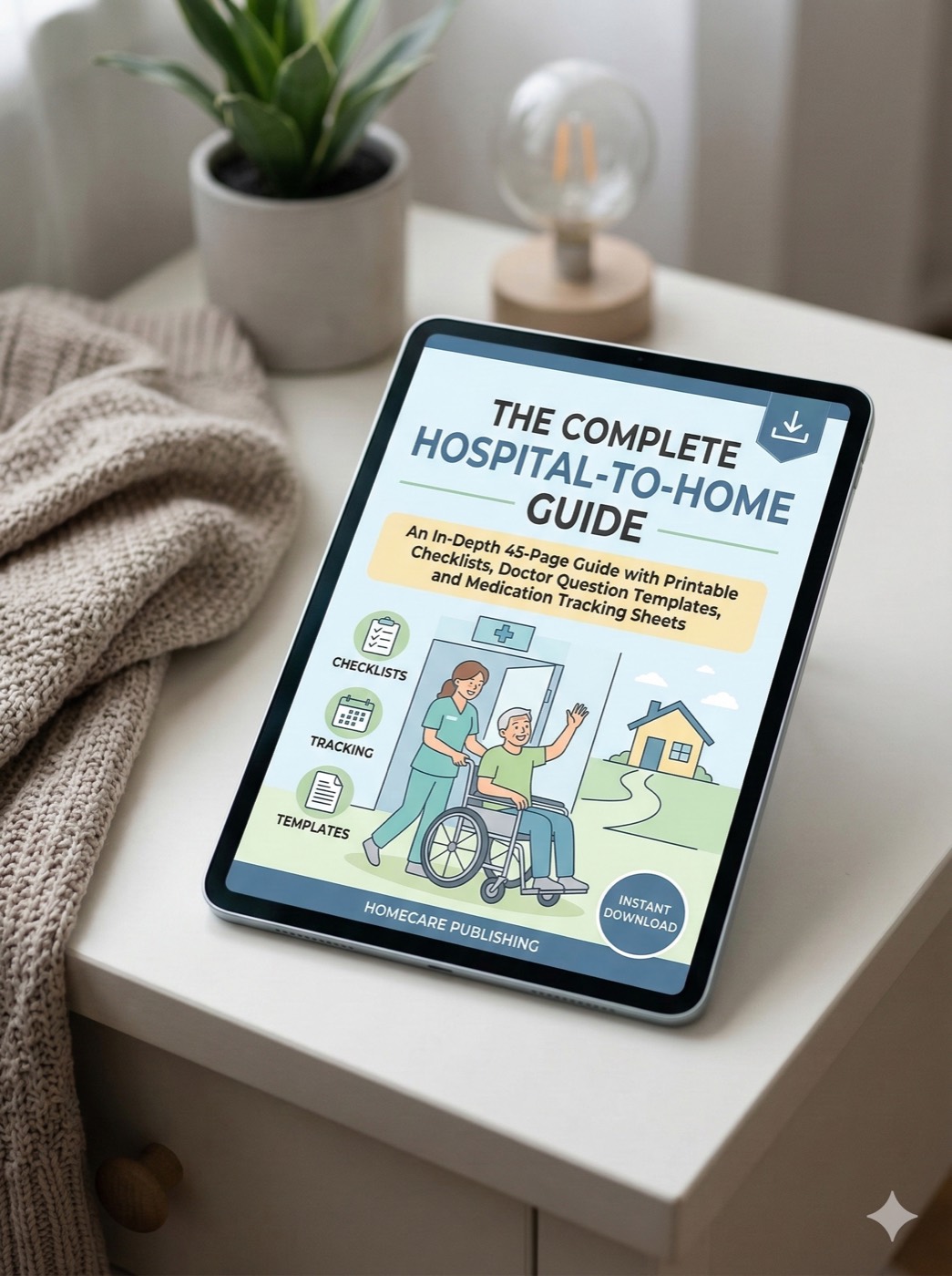
The gentle step-by-step guide that takes you from overwhelmed and unsure to calm, prepared, and in control. Written by a caregiver who has been exactly where you are.
You'll see why I wrote this guide before you decide if it's right for you.

STEP 01
During the Hospital Stay
- Ask for a written discharge plan at least 24 hours before release
- Request a complete medication list with dosages and instructions
- Ask who to call if something goes wrong after discharge
- Find out what follow-up appointments are needed and when
- Ask about home health aide referrals if needed
- Request copies of all test results, imaging, and doctor notes

STEP 02
Preparing the Home
- Clear pathways and remove tripping hazards (rugs, cords)
- Install grab bars in bathroom — especially near toilet and shower
- Prepare a bedroom on the ground floor if stairs are a concern
- Set up a medication organizer labeled by day and time
- Have emergency contact numbers posted visibly in the kitchen
- Stock the fridge with easy-to-eat, soft foods for the first days
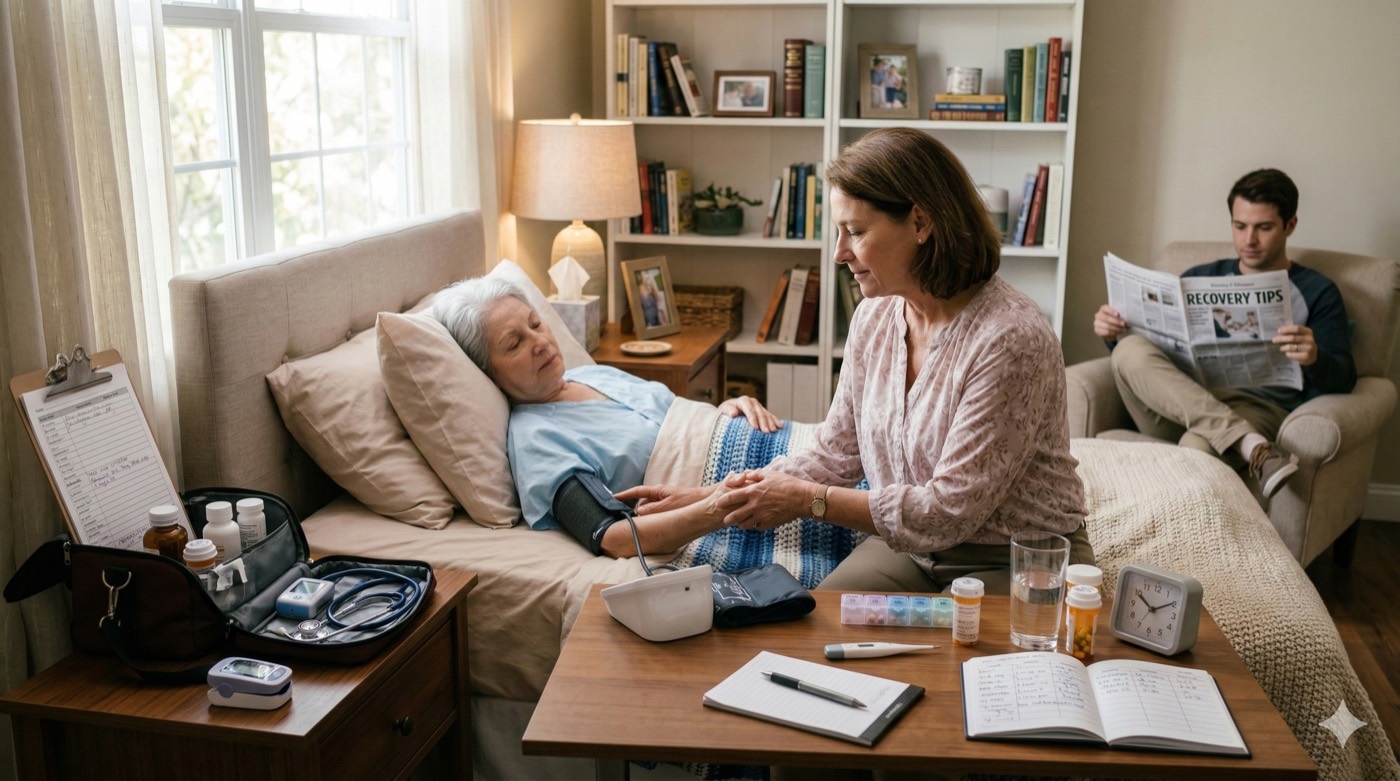
STEP 03
The First 72 Hours
- Establish a routine immediately — consistency is calming
- Administer medications exactly as prescribed, on schedule
- Monitor for warning signs: fever, confusion, shortness of breath
- Encourage hydration — dehydration is a common complication
- Limit visitors; rest is the priority for the first 48 hours
- Call the discharging doctor if anything feels wrong

STEP 04
Ongoing Care at Home
- Keep a care journal: symptoms, medications, mood, appetite
- Attend all follow-up appointments (schedule them now)
- Contact your local Area Agency on Aging for home support services
- Connect with a support group — caregiver burnout is real
- Ask the doctor about occupational therapy if mobility is affected
- Review the care plan every 2 weeks and adjust as needed
Call 911 or Emergency Services Immediately If You Notice:
“The hospital discharge checklist I found here saved us from a second hospitalization. I didn't know I needed to ask for a written discharge plan — nobody told me.”
James T.
Caregiver, shares his story on this platform

Emergency
911
Nurse Hotline / Telehealth
see your provider
Poison Control
1-800-222-1222
Discharging Provider / Care Team
ask your doctor
Context for caregivers
How Dementia Stage Affects Recovery at Home
Understanding where your loved one is in their journey helps you set the right expectations after a hospital stay.
Very Early Stage
Dementia Factors
Mild confusion, occasional forgetfulness, generally independent
Care Process
Supervision of medications, safety-proofing the home
Key Practice
Encourage independence while ensuring safety nets are in place
Early Stage
Dementia Factors
Increased disorientation, difficulty with complex tasks
Care Process
Structured routines, close monitoring of discharge instructions
Key Practice
Repeat instructions frequently; use written reminders
Middle Stage
Dementia Factors
Significant memory loss, wandering risk, behavioral changes
Care Process
24-hour supervision, simplified environment, consistency
Key Practice
Calming routines; avoid overstimulation after discharge
Late Stage
Dementia Factors
Minimal communication, full physical assistance required
Care Process
Full nursing-level care, hospice coordination if appropriate
Key Practice
Focus on comfort, dignity, and pain management